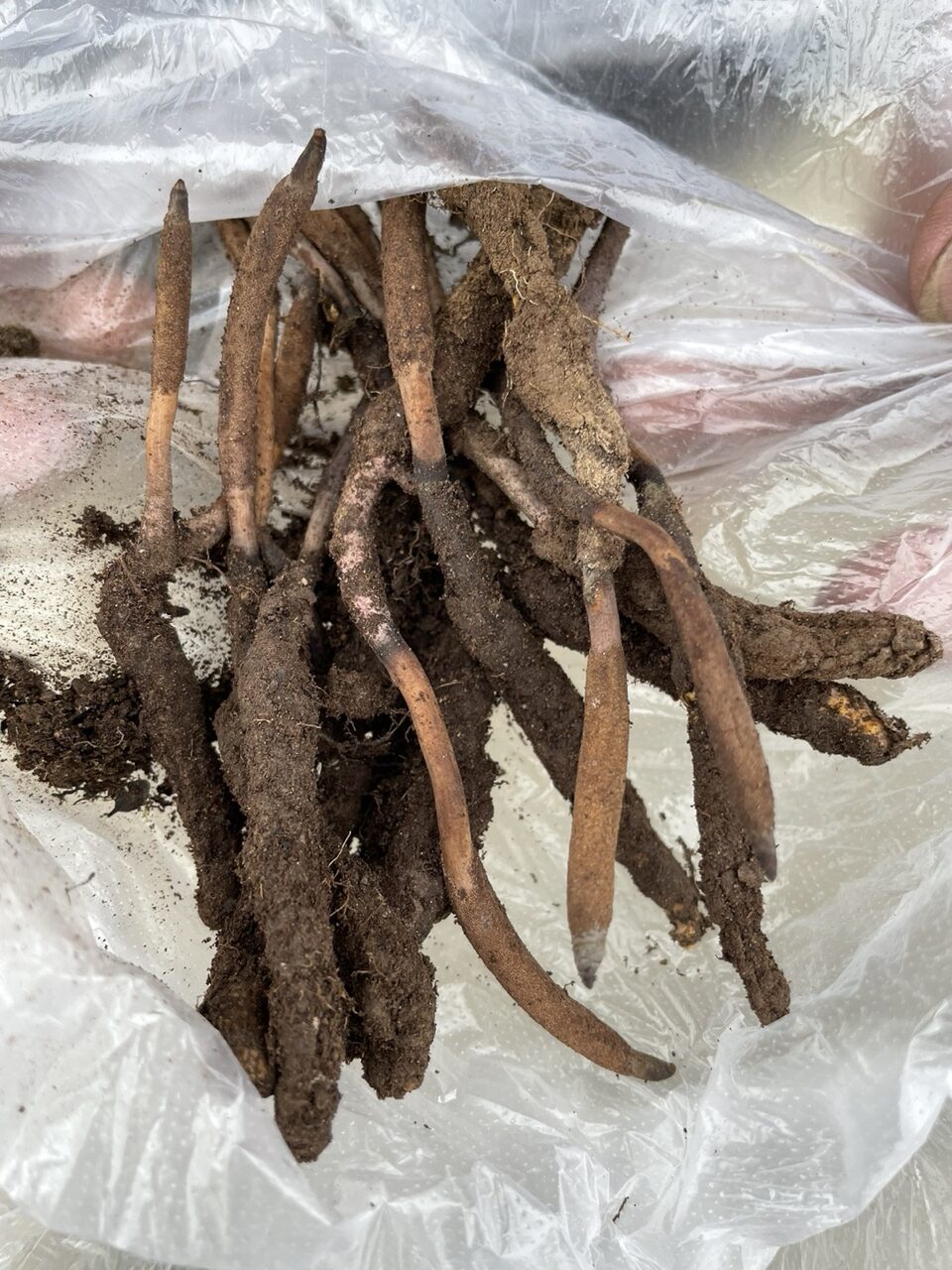
What is it?
Kida Jadi — literally "insect-herb" — is one of nature's strangest and most valuable organisms. Known scientifically as Ophiocordyceps sinensis, it is a fungus that parasitises the larvae of ghost moths living in the soil of the high Himalayas and Tibetan Plateau.
In late summer the fungus infects a caterpillar underground, slowly consuming it and mummifying its body. The following spring, a slender dark stalk (the stroma) erupts from the caterpillar's head and pushes above the soil — which is how it earned the Tibetan name Yartsa Gunbu, "winter-worm, summer-grass." In Chinese it is dōng chóng xià cǎo (冬虫夏草), meaning exactly the same thing.
Where it grows
It grows only at high altitude — roughly 3,000 to 5,000 metres — across Tibet, Qinghai, Sichuan, Yunnan, Nepal, Bhutan and the Indian Himalayan states of Uttarakhand, Sikkim, Himachal Pradesh and Arunachal Pradesh. Every spring, entire highland communities climb to the alpine meadows to hand-collect it during a short, intense season.
Why it's treasured
For over a thousand years, Tibetan and Chinese tradition has prized cordyceps as a premium tonic for energy, endurance and vitality. That folk reputation is why traders and the international press took to calling it "Himalayan Viagra" — a media nickname, not a claim we make for our products — while top-grade specimens, which can cost more than their weight in gold, earned it "Himalayan Gold."
The active compounds
Modern interest centres on compounds like cordycepin (3′-deoxyadenosine), adenosine, cordycepic acid (D-mannitol), polysaccharides and beta-glucans. Interestingly, the cultivated cousin Cordyceps militaris often contains more cordycepin than wild sinensis.
An honest note on the science
Cordyceps has a deep traditional legacy, and early laboratory and animal research is promising. However, robust human clinical evidence is still limited. The strongest (though still modest) human findings relate to aerobic exercise capacity. We believe in honesty: enjoy Kida Jadi as a time-honoured wellness tonic, not a cure.
Conservation
The cordyceps boom has been an economic lifeline for Himalayan communities — but decades of intensive harvesting plus a warming climate have caused yields to decline. In 2020 the IUCN listed Ophiocordyceps sinensis as Vulnerable. Choosing responsibly harvested wild cordyceps, or sustainable cultivated militaris, helps protect this fragile treasure.
